
Nicotine replacement therapy:
A primary care cheat sheet


Reviewed by Dr Marlin McKay, Family Practitioner
Reviewed by Dr Marlin McKay, Family Practitioner
Medical Academic Perspectives 04 - August/September 2025






Tobacco use remains the single greatest preventable cause of death worldwide. Yet simple management strategies are freely available.
A common misconception frames smoking as a simple lifestyle choice, but in reality, its profound difficulty stems from the highly addictive nature of nicotine. Most users want to quit but are thwarted by intense cravings and withdrawal symptoms. Nicotine Replacement Therapy (NRT) is a first-line pharmacological intervention designed to address this by providing a clean source of nicotine. This manages withdrawal and reduces the motivation to smoke, facilitating a controlled transition to complete abstinence.
Mechanism of action
NRT functions by binding to nicotinic acetylcholine receptors in the brain’s ventral tegmental area. This action stimulates dopamine release in the nucleus accumbens, mitigating the unpleasant withdrawal symptoms experienced upon cessation. It is crucial to understand that no NRT product replicates the rapid arterial spike in nicotine delivered by a cigarette. Instead, all formulations provide a slower, safer rise in nicotine levels via systemic venous absorption, which helps break the behavioural cycle of addiction without the harmful toxins of tobacco smoke.



The risks of prescribed NRT are substantially lower than those of continued smoking, even in patients with stable cardiovascular disease.


Formulations and dosing
NRT products are categorised into sustained-release and acute-dosing options, allowing for tailored treatment plans.
- Sustained-release (transdermal patches): These provide a steady, background dose of nicotine over 16 or 24 hours, simplifying compliance through passive delivery. They are ideal for managing baseline withdrawal symptoms. Side effects can include local skin reactions and, with 24-hour patches, potential sleep disturbances.
- Acute-dosing products: These allow patients to self-titrate against breakthrough cravings.
o Gum: The first NRT developed. It is chewed slowly and parked between the cheek and gum for buccal absorption. Acidic beverages (coffee, juice) must be avoided 15 minutes before and during use to prevent impaired absorption. The 4 mg strength is indicated for more heavily dependent smokers.
o Lozenges/sublingual tablets: Similar to gum but dissolves in the mouth, offering an alternative for those who dislike chewing.
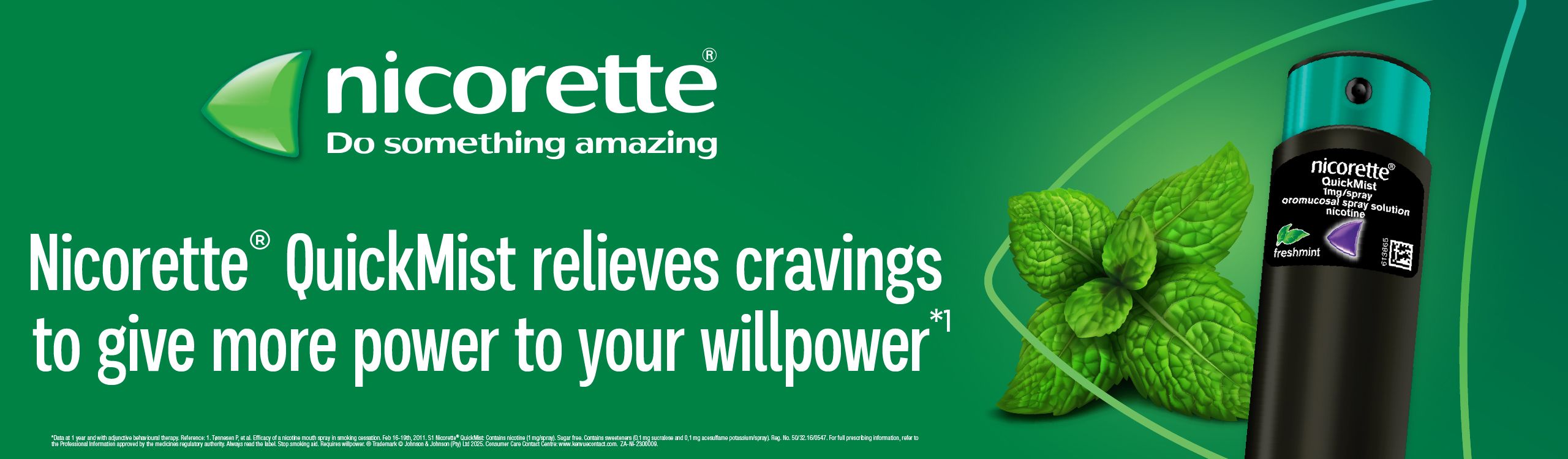
o Nasal spray: Offers the most rapid nicotine delivery of all licensed NRTs, absorbed through the nasal mucosa. It is highly effective for acute craving relief but may cause initial nasal irritation.
o Oral inhaler: Mimics the hand-to-mouth ritual of smoking but delivers nicotine primarily to the oral cavity, not the lungs. It addresses both physiological and behavioural aspects of addiction.
Combination therapy
The most effective strategy is often combining a sustained-release patch with an acute-dosing product. This approach simultaneously manages constant background withdrawal and acute, situational cravings. Evidence shows this combination can increase quit rates by 34–54% compared to using a single product alone.
Safety
NRT is well-tolerated. Side effects are typically mild and dose-dependent (e.g., nausea, headache, local irritation). The risks of prescribed NRT are substantially lower than those of continued smoking, even in patients with stable cardiovascular disease. A significant barrier is poor compliance, often due to misconceptions about NRT’s addictiveness or a false sense of security once initial cravings subside.
Conclusion
NRT is a safe and effective cornerstone of smoking cessation, increasing the chances of success by 50–70%. A proactive approach in primary care, involving personalised product selection and robust patient education, is essential to help smokers break free from addiction.
REFERENCES
Wadgave, U, et al, 2016. Nicotine Replacement Therapy: An Overview. Int J Health Sci (Qassim). 2016 Jul;10(3):425-35.



 Built with Shorthand