


Pain and fever are among the most frequent presentations in pharmacy practice. While paracetamol remains a widely used antipyretic and analgesic, ibuprofen – a nonsteroidal anti-inflammatory drug (NSAID) – offers distinct advantages when inflammation is a key driver of symptoms.1,2 Pharmacists, as frontline healthcare providers, play a critical role in guiding safe and effective use of ibuprofen for short-term management of acute pain and fever.
MECHANISM OF ACTION
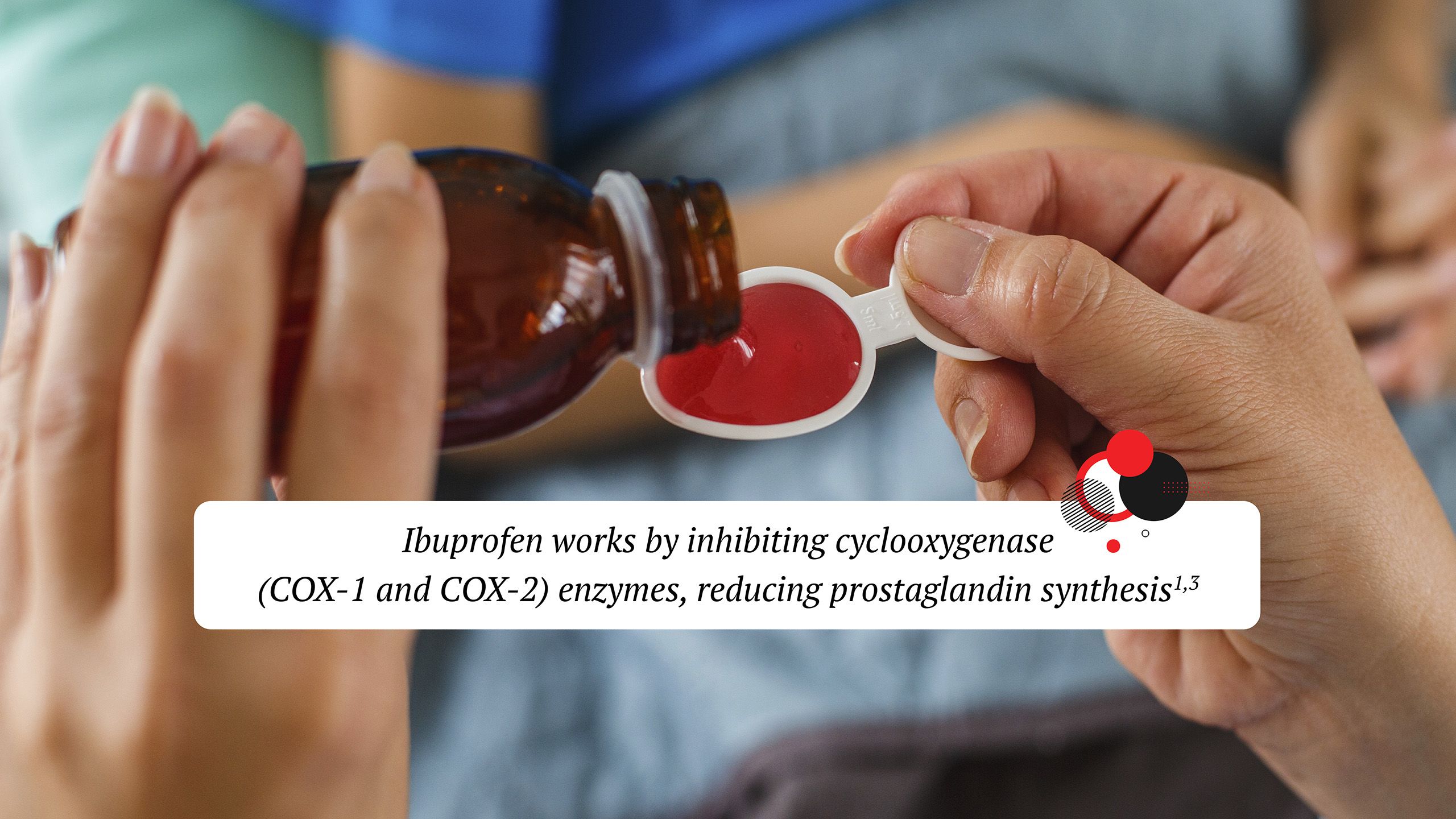
Ibuprofen works by inhibiting cyclooxygenase (COX‑1 and COX‑2) enzymes, reducing prostaglandin synthesis. Prostaglandins mediate inflammation, pain, and fever; their suppression alleviates discomfort, lowers temperature, and reduces inflammatory responses. This mechanism distinguishes ibuprofen from paracetamol, which acts centrally and lacks significant anti-inflammatory activity.1,3






CLINICAL APPLICATIONS
Acute pain
Ibuprofen is effective for mild to moderate acute pain, including musculoskeletal pain (sprains, strains, back pain), dental pain, and headaches.1,2 Its anti-inflammatory properties make it particularly suitable for conditions where inflammation contributes to pain, such as musculoskeletal injuries and juvenile idiopathic arthritis.1
Fever
Fever is a physiological response to infection and inflammation.1,2 Both paracetamol and ibuprofen reduce fever, but ibuprofen may provide a slightly stronger and longer-lasting antipyretic effect.1 Guidelines emphasise that the primary goal of antipyretic therapy is to improve comfort rather than normalise temperature. Ibuprofen is recommended when fever is accompanied by discomfort or inflammatory symptoms, but should be avoided in dehydrated children, infants under three months, and those with asthma, gastrointestinal disorders, or renal impairment.2
DOSING AND DURATION
- Paediatric dosing: 5-10 mg/kg every 6-8 hours, maximum 40 mg/kg/day.1
- Adult OTC dosing (FDA/NICE): 200-400 mg every 4-6 hours as needed, maximum 1 200 mg/day without medical supervision.4,5 Prescription doses may reach 2 400-3 200 mg/day under medical supervision.6
- Duration limits: Do not use for more than 10 days for pain or more than three days for fever unless directed by a doctor.4
SAFETY PROFILE AND CONTRAINDICATIONS
- Gastrointestinal risk: Ibuprofen can cause mucosal irritation and bleeding, particularly in patient with a history of peptic ulcer disease.4
- Renal impairment: Risk is heightened in dehydrated children or those with pre-existing renal dysfunction.2,5
- Hypersensitivity reactions: Rash and cough were observed in small proportions of paediatric patients in prospective studies.2
- Cardiovascular risk: High-dose ibuprofen (≥2 400 mg/day) is associated with a small increased risk of myocardial infarction and stroke. EMA advises caution in patients with cardiovascular disease or risk factors.6
- Contraindications: Active peptic ulcer disease, GI bleeding, severe heart failure, severe renal impairment, and use in the third trimester of pregnancy.5,6




PRACTICAL GUIDANCE FOR PHARMACISTS
- When to recommend: Ibuprofen is appropriate for short-term management of acute musculoskeletal pain, dental pain, headaches, and fever associated with viral illness when discomfort is significant.2,5
- Counselling points:
• Administer with food to reduce gastrointestinal irritation.5
• Adhere strictly to weight-based dosing in children.2,5
• Avoid in infants <3 months, dehydrated patients, or those with asthma, GI disease, renal impairment, or cardiovascular risk factors.2,6
- Red flags for referral: Persistent or high fever (>39-40 °C), severe or worsening pain, or suspected bacterial infection/systemic illness warrant medical evaluation.2,5
Ibuprofen’s dual role as an analgesic and anti-inflammatory agent makes it a valuable option in pharmacy practice for managing acute pain and fever. Pharmacists are uniquely positioned to guide appropriate use, ensuring safe dosing, identifying contraindications, and recognising red flags for referral. By reinforcing evidence-based recommendations from clinical studies and authoritative guidelines, pharmacists can optimise patient outcomes while minimising risks.
REFERENCES
- Kaur P, Verma P, Singh AP, Singh AP. A review article on paracetamol and ibuprofen use in pediatric populations. Int J Pharm Res Dev. 2025. Available from: https://www.pharmaceuticaljournal.net/archives/2025/vol7issue1/PartD/7-1-32-964.pdf. Accessed April 2026.
- De’Angelis GL, Vincenzi F, Fornaroli F, et al. New perspectives for optimizing fever and pain management in pediatrics: evidence supporting therapeutic awareness in clinical practice. Italian Journal of Pediatrics. August 2025. Available from: https://pmc.ncbi.nlm.nih.gov/articles/PMC12357452/. Accessed April 2026.
- Charde V, Sanklecha M, Rajan P, et al. Assessing the safety and adverse effects of paracetamol, ibuprofen, and their combination in paediatric pain and fever management: A prospective observational study. J Family Med Prim Care. February 2025. Available from: https://pmc.ncbi.nlm.nih.gov/articles/PMC11922349/. Accessed April 2026.
- FDA staff. Ibuprofen Drug Facts Label. Postmarket Drug Safety Information for Patients and Providers (FDA). 2016. Available from: https://www.fda.gov/drugs/postmarket-drug-safety-information-patients-and-providers/ibuprofen-drug-facts-label. Accessed April 2026.
- NHS staff. Ibuprofen for adults (Nurofen). NHS website. 2025. Available from: https://www.nhs.uk/medicines/ibuprofen-for-adults/. Accessed April 2026.
- EMA staff. Ibuprofen – and dexibuprofen-containing medicines – referral. European Medicines Agency. 2015. Available from: https://www.ema.europa.eu/en/medicines/human/referrals/ibuprofen-dexibuprofen-containing-medicines. Accessed April 2026.
Image Credit: Getty Images
 Built with Shorthand